
Driving test
The 10 Most Common Driving Test Mistakes (and How to Avoid Them)
The DVSA publishes the faults that fail the most driving tests in Great Britain, and the list barely changes from year to year. Here is the current top 10, in order, with what we do in lessons to stop each one appearing on your test.
1. Not making effective observations at junctions
Slow down earlier so you have time to look. Look both ways properly, then look again before you commit. Parked cars and hedges mean you often need to creep forward first.
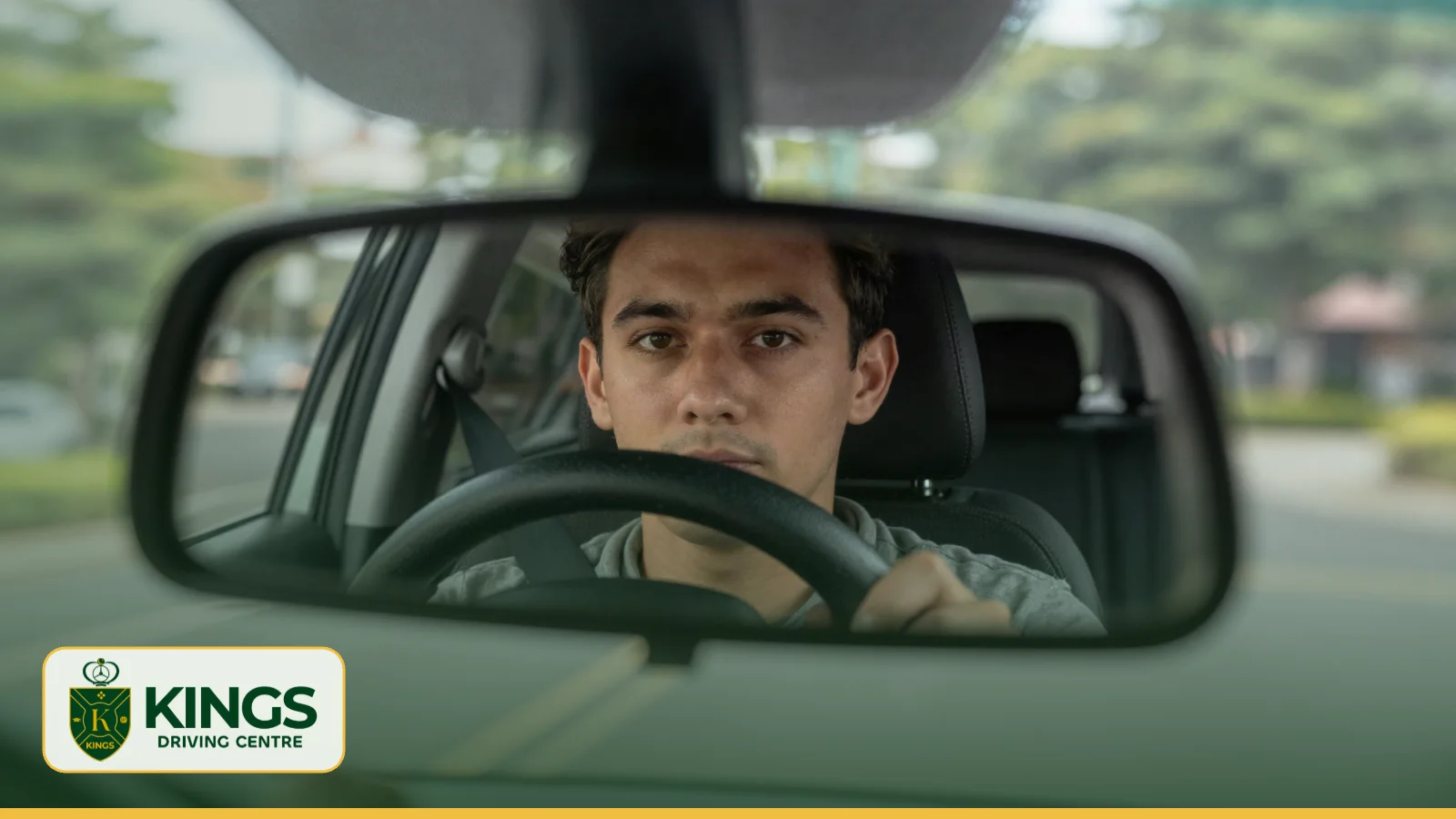
2. Not using mirrors correctly when changing direction
Mirrors before every signal, every change of speed and every change of direction, every time. On test, examiners watch whether you act on what you see, not just whether your eyes move.
3. Not moving off safely
Check all round, including your blind spot, before pulling away from the kerb or after a stop. Moving off into the path of a cyclist is a classic serious fault.
Instructor tip
Almost every fault on this list is really an observation or planning problem. Look further ahead and most of them disappear together.
4. Incorrect positioning when turning right at junctions
Position just left of the centre line on the approach, and do not cut the corner as you turn into the new road.
5. Not having proper control of the steering
Steer smoothly with both hands. Steering too early or too late on turns and bends shows up quickly, especially on tight residential corners.
6. Not responding appropriately to traffic lights
Stop on red, do not creep over the stop line, and do not wave through at a green filter you have not actually got. Watch for pedestrians still crossing when the lights change.
7. Not responding correctly to traffic signs
Speed limit changes, no-entry signs and lane signs. Read the road ahead rather than the bonnet.
8. Poor positioning on the road during normal driving
Keep well to the left without hugging the kerb, and stay in the correct lane on multi-lane roads and roundabouts.
9. Not responding correctly to road markings
Lane arrows, box junctions, bus lanes and give-way lines. On the approach to big roundabouts the markings tell you which lane you need.
10. Not keeping control of the vehicle during reverse parking
Go slowly. Clutch control in a manual, or gentle brake control in an automatic, is what makes a reverse park calm. Observation during the manoeuvre matters as much as the finish.
How to use this list
Ask your instructor to mark your drives against these ten headings, then take a mock test on live routes. The faults that still appear under test conditions are the ones to fix before you book. Around Tolworth, numbers 1, 8 and 9 come up most at Tolworth Roundabout and on the A3 slip roads, which we cover in the hardest junctions around Tolworth.
Ready to get started?
Tell us your postcode and whether you want automatic or manual, and we will come back with an instructor, a time and an honest estimate of the hours you need.
